
Michaela Krug O’Neill, Chris Agnew, Lakshmi Balasubramanian, Cristina Barnard, Lindsey Kaler, Eliana Katz, Brienna Kightlinger, Elizabeth Kozleski, Mary Laski, Christopher J. Lemons, Susanna Loeb, Susan Moffitt, Lydia Rainey, Sean Reardon, Patricia Strach, adhika Unnikrishnan, Lauren Ziegler
Differentiation means adjusting instruction based on what students currently know and need. It involves consistently and responsively adapting what is taught, how it is taught, and how learning is assessed, while holding high expectations for every learner. Differentiation is now especially important as post-pandemic learning patterns have widened the range of academic needs within many classrooms, leaving teachers responsible for supporting students working at very different levels. The evidence suggests that differentiation cannot rest on individual teachers’ efforts alone; it depends on well-designed curricular materials and assessments, professional training and support, and school- and system-level structures that make targeted instruction feasible. Differentiation and targeted instruction are central to improving student outcomes and advancing equity.
This brief synthesizes evidence from a set of Getting Down to Facts III reports that speak directly to this theme, drawing most heavily on Loeb and Ziegler’s analysis of relationship-based personalized learning and high-impact tutoring and Laski, Rainey, and Kightlinger’s review of strategic staffing models. It also incorporates findings on the paraeducator workforce, special education staffing, and the potential role of technology as enabling infrastructure. These studies frame differentiation as a system design challenge shaped by how schools organize time, staffing, and supports.
Key Findings
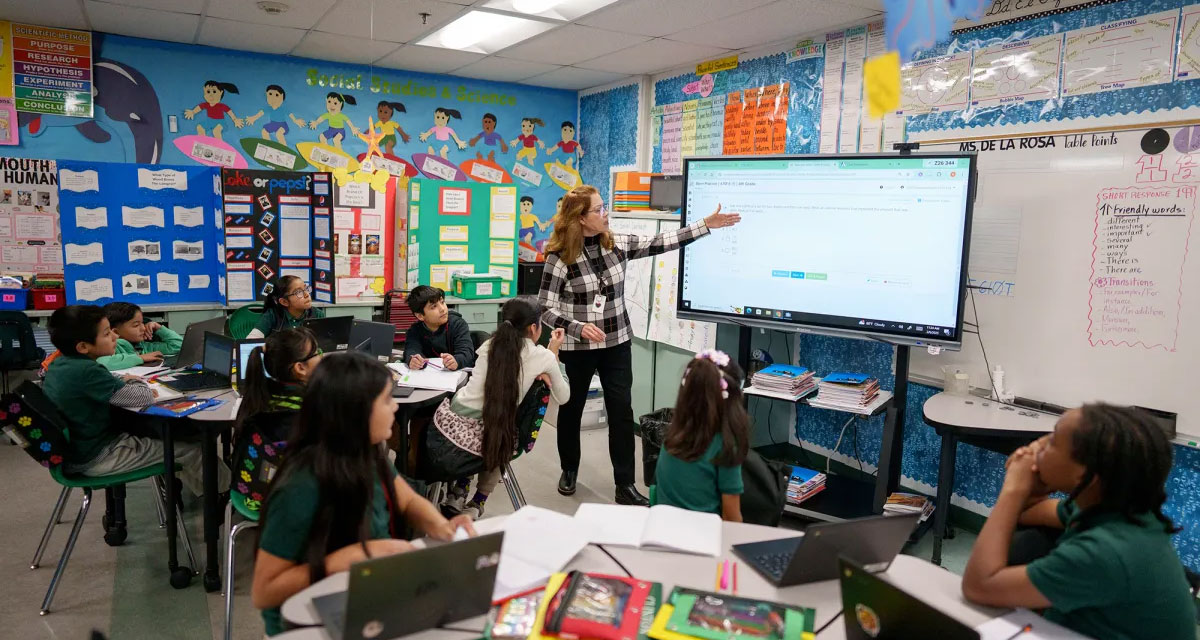
1. Current ways of organizing teaching and learning in most K–12 classrooms do not provide sufficient opportunities for targeted instruction and individualized feedback. Most classrooms are still structured around one teacher responsible for a large group of students, with limited time, staffing flexibility, or built-in support for small-group instruction and frequent adjustment based on student need. As a result, differentiation often depends on individual teachers working within classroom structures that were not designed to make targeted instruction routine.
2. Strategic staffing models that include paraeducators and other support staff can expand schools’ capacity for differentiated instruction, but training and coordination are needed. By rethinking how schools organize educators’ time and responsibilities, strategic staffing models can increase differentiation and improve teacher and student outcomes. However, paraeducators are most effective when their instructional roles are clearly defined and supported through job-embedded training, supervision, and planning time with teachers.
3. High-impact tutoring can support differentiation, and districts across California are increasingly taking this approach. Evidence demonstrates strong learning gains from high-impact tutoring programs that meet specific design criteria (e.g., frequent sessions, small groups, alignment with core instruction, and sustained tutor-student relationships). California has committed billions of dollars to tutoring and related supports, and more than 80 percent of districts reference tutoring in their strategic plans, indicating broad uptake even as quality and implementation vary.
4. Technology can support differentiation, while human relationships and instructional judgment remain central to student engagement and learning. Technology can make differentiation more feasible in several ways, including embedding frequent checks for student understanding, organizing learning data to support flexible grouping, and streamlining documentation and communication. However, these tools work best as supports for teachers and staff, not substitutes.
5. Differentiation for students with disabilities depends on coherent systems of shared responsibility across general and special education. As more students with disabilities spend substantial time in general education classrooms, effective differentiation requires coordinated roles, shared goals, and consistent routines for planning and support. Silos between general and special education can make supports fragmented, impeding both inclusion and differentiation.