
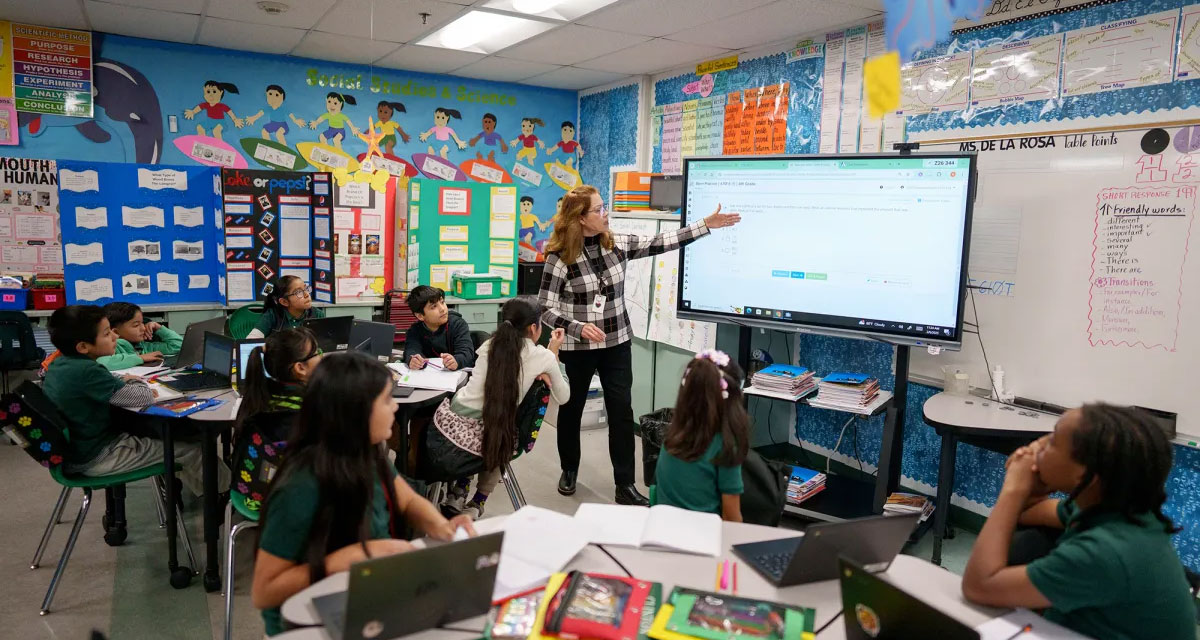


The early care and education (ECE) workforce is a vital component of California’s social and economic infrastructure. In addition to their central role supporting young children’s learning and development, ECE professionals create safe, nurturing environments that allow parents to pursue education or work—contributions that are essential for the functioning of the broader economy. Despite their skilled work and the growing recognition of the connection between workforce compensation, professional support, and quality, the ECE workforce remains among the lowest paid professions. These conditions contribute to the high staff turnover and widespread workforce shortages that continue to challenge the stability of the ECE field nationwide. Although this description holds for many sectors of the ECE workforce in California, transitional kindergarten (TK) offers an exception, illustrating the benefits of an early childhood sector which pays a living wage.
The previous section focused on preparation and ongoing support designed to ensure teacher effectiveness. In this section we describe the ECE workforce, its challenges, recent improvements and what is yet to be done. Specifically we ask:
- Who is in the ECE workforce and how are they distributed across program types?
- What are ECE staff across program types paid and what kind of benefits do they receive?
- What staffing shortages and turnover does the field experience?
- How is the ECE workforce faring in terms of mental health?
- What is being done in California to address shortages, turnover and mental health?
California has long suffered from a lack of data regarding its ECE workforce. The available data summarized in this section comes from many sources across several years. The “workforce” is categorized differently depending on the source of the data--sometimes by the age of children, sometimes by the setting (e.g., school-based or not), sometimes by the source of funding, and so on. This piecemeal approach to providing information on the California ECE workforce is not ideal, but is unavoidable given the nature of the data. (See Section 6 for a detailed discussion of data challenges and needs.)