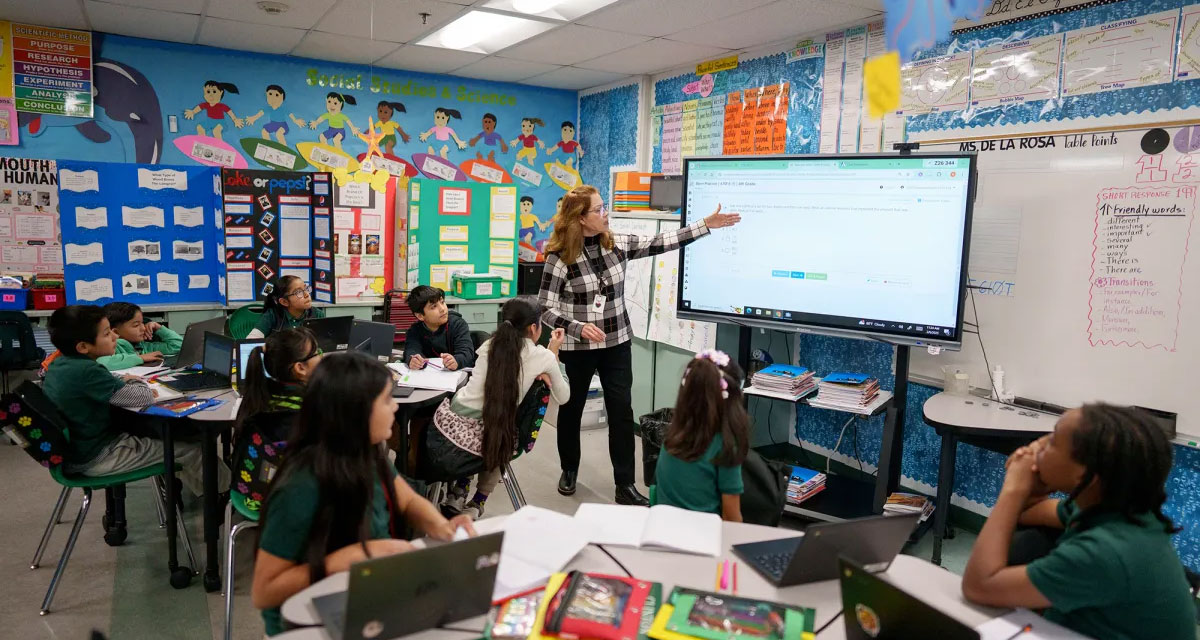

The accelerating development of educational technologies offers the promise of reshaping special education systems to be more responsive, flexible, and equitable (Rose et al., 2022; U.S. Department of Education, 2024). Historically, special education has grappled with reconciling the variability in student learning profiles by borrowing heavily from medical models that emphasized diagnosis, classification, treatment, and remediation (Annamma et al., 2022; Powell, 2021). Although these approaches were embedded in the original federal legislation mandating special education, their translation into educational contexts has been uneven and often constrained by limited capacity and inequitable access to resources (Education for All Handicapped Children Act of 1975; U.S. Department of Education, 2023).
Early implementation was marked by shortages of qualified personnel capable of conducting comprehensive assessments and delivering aligned services (McFarland et al., 2023; U.S. Government Accountability Office, 2022). Identification processes were further shaped by patterns of exclusion and inequitable opportunity to learn, contributing to persistent disproportionality across race, language, and disability (Fish, 2021; Sullivan & Bal, 2023). Within this system, categorical disability labels became organizing structures for placement and service delivery, reinforcing assumptions that diagnostic categories corresponded to distinct instructional approaches (Harry & Klingner, 2022; McLeskey et al., 2022).
In the 1970s and early 1980s, a series of research studies found that although systems for categorization and placement by disability label were in place, the instructional services delivered in classrooms did not differ substantially across categories; individualized education programs (IEPs) were developed, but instructional practices often remained largely uniform regardless of diagnostic classification (McLeskey et al., 2022; Powell, 2021). Moreover, evidence of consistent, substantial year-to-year academic progress for students with disabilities was limited, raising concerns about the effectiveness of services provided (Hanushek et al., 2021; McFarland et al., 2023). It was not until the U.S. Supreme Court clarified that students with disabilities must demonstrate meaningful educational progress in Endrew F. v. Douglas County School District RE-1 that families gained stronger legal footing to argue not only for access to schooling but for substantive educational benefit (Yell, Bateman, & Shriner, 2022).
Across many regions of the United States, persistent shortages of qualified personnel—including special educators, school psychologists, and related service providers—have constrained the ability of schools to fully implement federal mandates related to assessment, service delivery, and assistive supports (Bettini et al., 2022; U.S. Government Accountability Office, 2022). Early implementation of federal special education law was uneven, and systems for monitoring individualized student progress relied heavily on labor-intensive record keeping by educators and specialists. These structural challenges have persisted and continue to contribute to workforce instability and shortages (Bettini et al., 2022).
More broadly, governance and capacity challenges have characterized special education systems from their inception to the present. Extensive litigation in the 1970s and 1980s helped define the contours of a free appropriate public education, while subsequent reauthorizations of federal law have maintained these guarantees. However, federal funding has consistently fallen well below the originally envisioned 40 percent of excess costs, with recent contributions remaining closer to approximately 11–13 percent (U.S. Department of Education, 2023; Congressional Research Service, 2024).